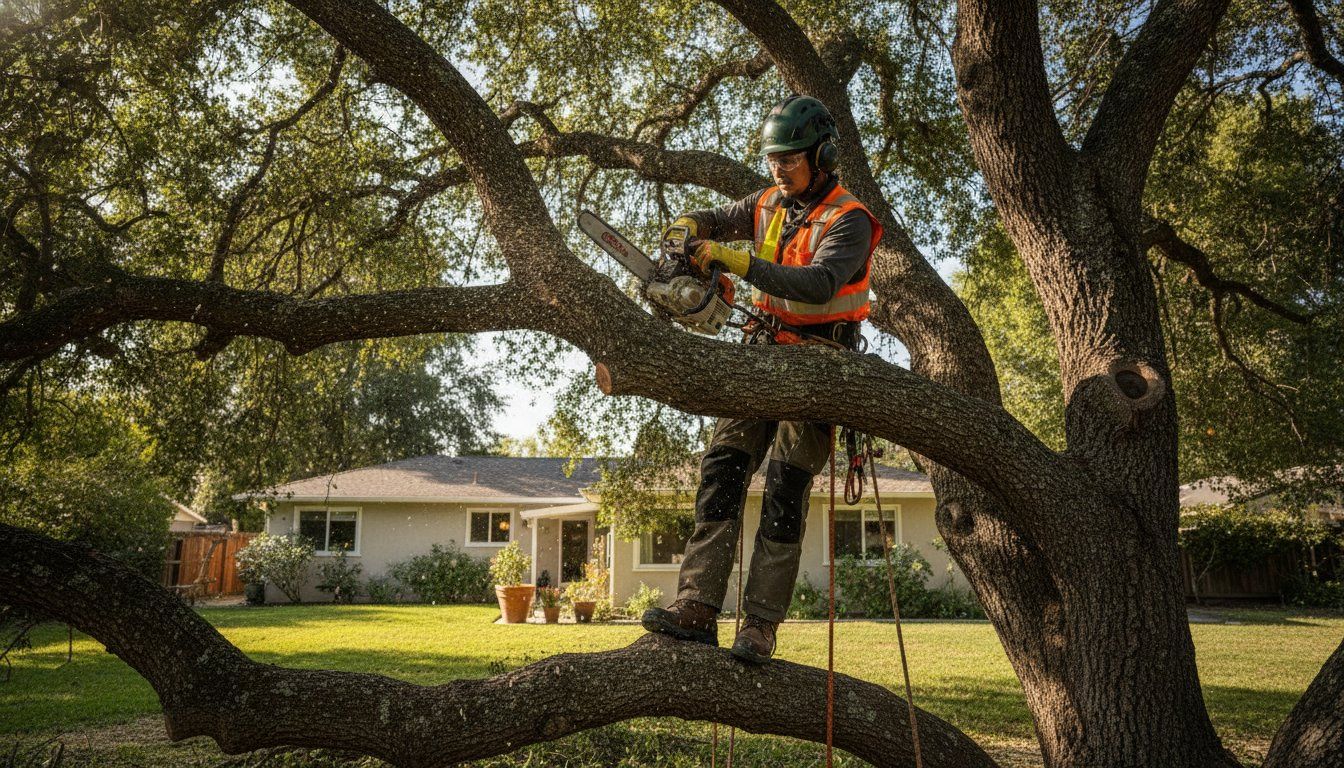
Dead Tree Removal - Dangerous Myths Debunked
When Is Dead Tree Removal Absolutely Necessary? 5 Dangerous Myths Debunked
What if that weathered oak in your backyard isn't just sleeping through the season, but is actually a multi-ton liability waiting for the next big storm? It's a question many homeowners face as they look at a crown of brittle branches and wonder if it's time for dead tree removal. We know it's natural to hope a tree will spring back to life, especially when you're balancing a budget and worrying about the complexity of the job. You want your yard to be a safe haven, not a source of stress whenever the wind picks up.
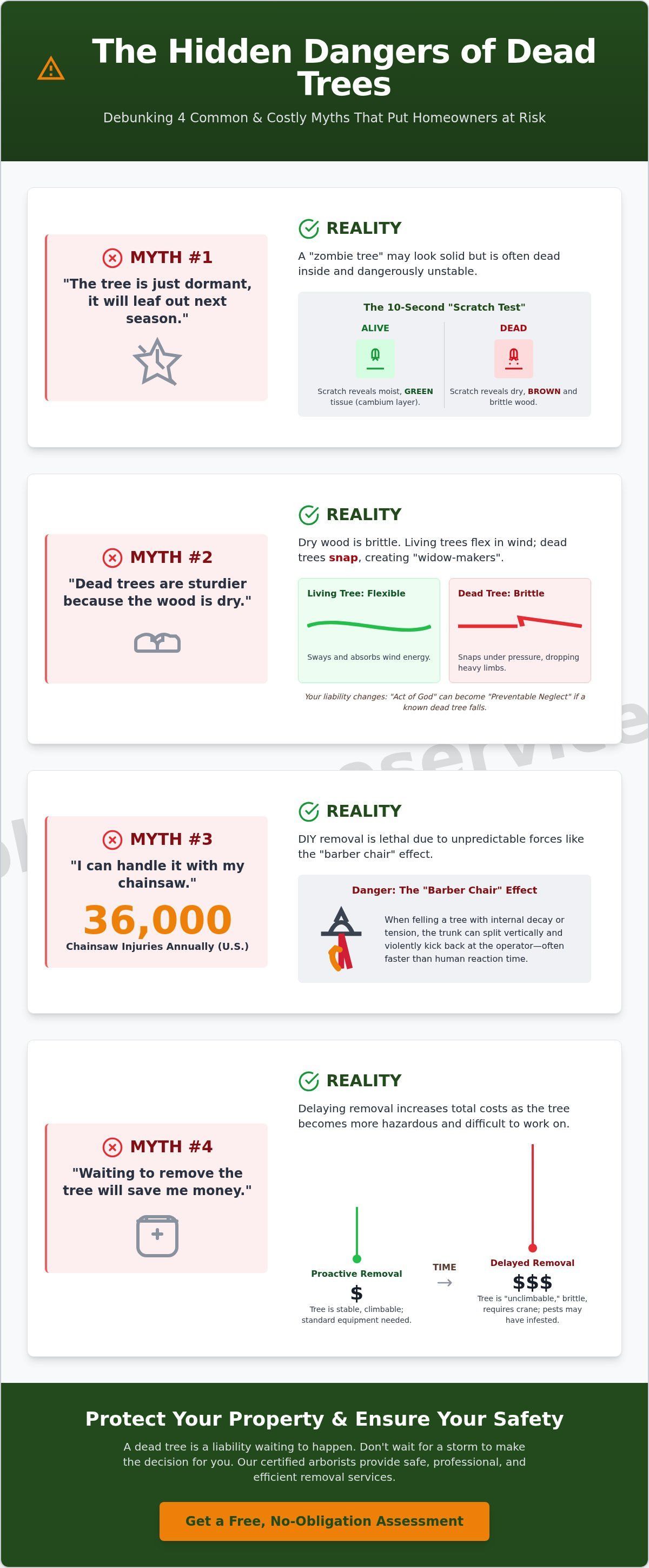
We're here to help you address those concerns with professional clarity. In the following guide, you'll learn how to identify true hazards and why delaying action can lead to significant legal and safety liabilities. With approximately 36,000 chainsaw injuries occurring annually in the United States, the risks of DIY work or waiting too long are very real. We'll debunk five dangerous myths that keep homeowners in harm's way and provide a clear path toward a safer, more beautiful property.
Key Takeaways
- Learn how to tell the difference between a dormant tree and a dead one using a simple, 10-second "scratch test" diagnostic.
- Understand the science of wood decay and why brittle, dry branches are far more likely to fail during unexpected wind gusts.
- Discover why DIY efforts can be lethal due to the "barber chair" effect and how chainsaw vibrations can dislodge heavy, unseen limbs.
- Identify how waiting for dead tree removal actually increases your total costs by making trees "unclimbable" and attracting wood-destroying pests.
- Get a clear plan for safe, professional removal that prioritizes the protection of your lawn and surrounding landscape.
Table of Contents
- Myth #1: "The Tree is Just Dormant, It Will Leaf Out Next Season"
- Myth #2: "Dead Trees Are Sturdier Because the Wood is Dry"
- Myth #3: "I Can Safely Handle Dead Tree Removal with a Chainsaw"
- Myth #4: "Waiting to Remove the Tree Will Save Me Money This Year"
- Professional Dead Tree Removal in Temple City
Myth #1: "The Tree is Just Dormant, It Will Leaf Out Next Season"
It's easy to look at a bare tree and hope for the best. In California, many of us are used to seeing our majestic oaks or sycamores shed their leaves, but there's a fine line between a tree that's resting and one that's finished. Waiting for a "miracle" next spring is one of the most common reasons homeowners delay necessary dead tree removal. Unfortunately, by the time next season rolls around, a dead tree has often become significantly more unstable and dangerous.
Is your tree actually sleeping? Probably not if every other tree on the block is flourishing. While some species enter a deep dormancy, a tree that fails to produce buds or shows brittle, snapping twigs is likely in a terminal state. In the scientific community, a standing dead tree is known as a Snag (ecology). While these provide vital habitat in a forest setting, in a residential yard, they're often "zombie trees." They appear solid on the outside but are dead on the inside, standing precariously over your roof or driveway.
The Scratch Test: A Homeowner’s First Step
You don't need expensive equipment to get a preliminary diagnosis. Use your fingernail or a small pocketknife to gently scratch a tiny patch of bark on a few different branches. What do you see underneath? If the layer directly below the bark, known as the cambium, is moist and green, the tree is still alive. If you find brown, dry, or brittle wood, that specific limb is dead. To get the most accurate result, perform this test on several branches at different heights. If the trunk itself shows brown wood during a scratch test, the entire structure is likely lost.
Signs of Internal Decay You Might Miss
Sometimes the signs of a dying tree aren't as obvious as a bare branch. Look closely at the base of the trunk for fungal growth or "conks." These mushroom-like structures are a clear signal of advanced internal root rot. You can also try tapping the trunk with a rubber mallet; a hollow, echoing "thud" suggests the heartwood has decayed significantly. Have you noticed small, leafy sprouts shooting out from the very bottom of the trunk? These are called epicormic shoots, often referred to as the tree’s "last gasp." The tree is desperately trying to produce energy because its upper canopy is failing. When you see these signs, it's time to prioritize dead tree removal before the next windstorm makes the decision for you.
Myth #2: "Dead Trees Are Sturdier Because the Wood is Dry"
Dry wood makes for excellent kindling in a fireplace, but it makes for a dangerous standing structure. Many property owners believe that because the wood has dried out and hardened, it's less likely to fall. This is a dangerous misconception that often leads to delaying dead tree removal. In reality, the drying process is actually the beginning of structural collapse.
Living trees are resilient because they're full of moisture and flexible fibers. They're designed to sway and bend during a storm, absorbing the energy of the wind. Once a tree dies, the cellulose and lignin that provide its strength begin to shatter. This leads to what arborists call "brittle failure." Instead of bending, the wood snaps like a dry cracker. In Temple City, where sudden wind gusts can put immense pressure on a canopy, a brittle tree doesn't stand a chance. It loses the "give" it once had, making it a ticking time bomb during the next Santa Ana wind event.
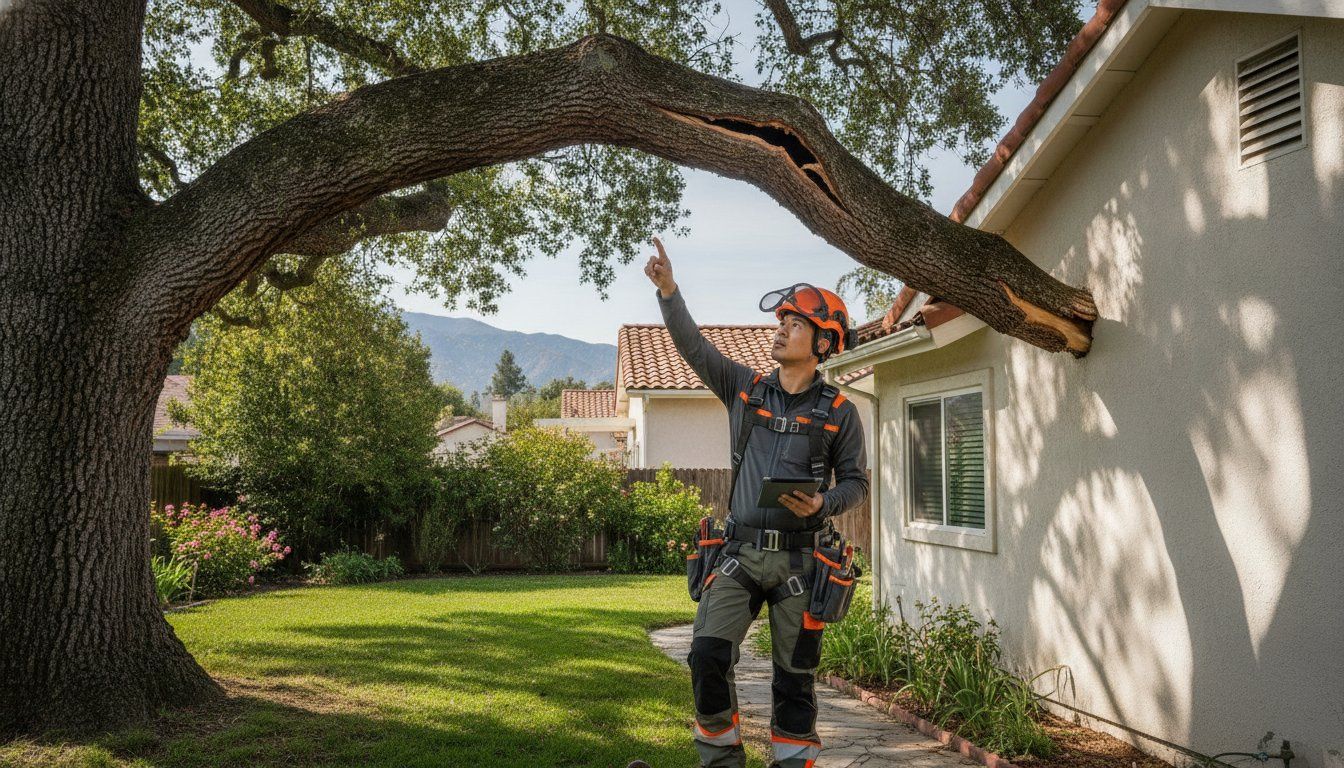
We also have to consider the "Target" concept. If that tree were to fail right now, what would it hit? Is it leaning toward your guest house, your neighbor's fence, or the sidewalk where children walk to school? A dead tree is a liability precisely because its fall path is so hard to predict.
The Physics of a Falling Dead Tree
Dead branches are often called "widow-makers" for a reason. Because the wood is no longer held together by living tissue, these limbs can drop without a second's notice, even on a perfectly calm afternoon. Gravity is constantly pulling at these heavy, brittle points. Unlike a living limb that might crack and hang, a dead limb usually detaches completely and falls straight down with terminal force. These unpredictable fall paths make the area around a dead tree a permanent hazard zone for your family and pets.
Homeowner Liability and Insurance Realities
From a legal perspective, you have a "duty of care" to maintain a safe environment on your property. If a healthy tree falls during a freak storm, insurance companies usually classify it as an "act of God." However, if a tree was visibly dead and you failed to take action, that classification changes to "preventable neglect." Insurance adjusters are trained to look for signs of long-term decay. If they determine the damage was caused by a known hazard, they may deny your claim entirely, leaving you to pay for repairs out of pocket. If you're concerned about a specific tree, getting a professional assessment is the smartest way to create a paper trail of responsible maintenance and protect your financial interests. Proactive dead tree removal is always cheaper than a denied insurance claim and a lawsuit.
Myth #3: "I Can Safely Handle Dead Tree Removal with a Chainsaw"
It’s a common sight in many suburban garages: a well-maintained chainsaw waiting for a weekend project. You might think felling that leafless trunk yourself will save time and money. However, dead tree removal is one of the most dangerous tasks in property maintenance. While a living tree behaves with some level of predictability, a dead one is a structural wild card. The internal decay we discussed earlier doesn't just make the wood brittle; it makes the entire felling process lethal for the untrained operator.
One of the most terrifying risks is the "Barber Chair" effect. This happens when a tree with internal rot or a heavy lean splits vertically during the back cut. Instead of falling forward, the trunk snaps upward and backward with explosive force. It’s a split-second event that can be fatal. Beyond the trunk itself, the simple vibration of your chainsaw can be your worst enemy. Those high-frequency tremors travel up the trunk, easily dislodging top-heavy limbs that are barely hanging on. These "widow-makers" can drop directly onto the operator before the first cut is even finished.
Why Dead Wood is a Climber’s Nightmare
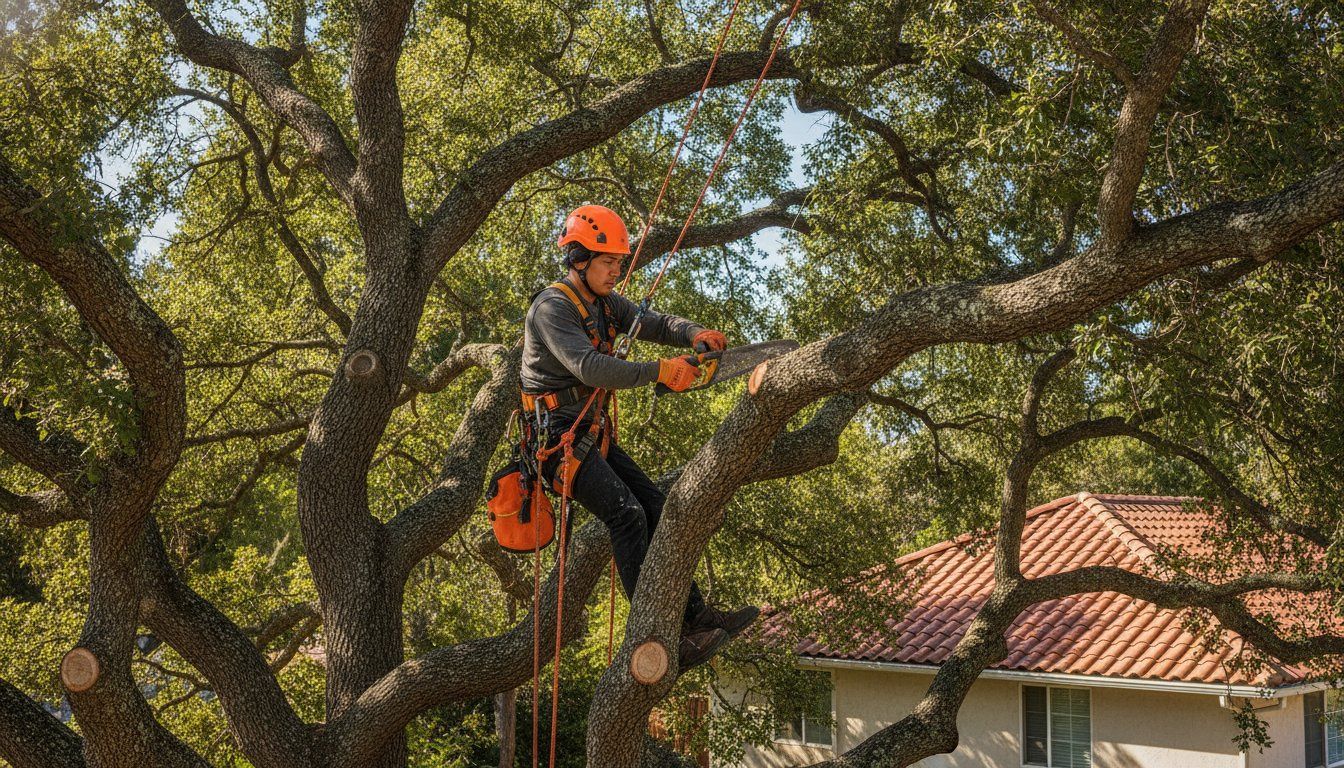
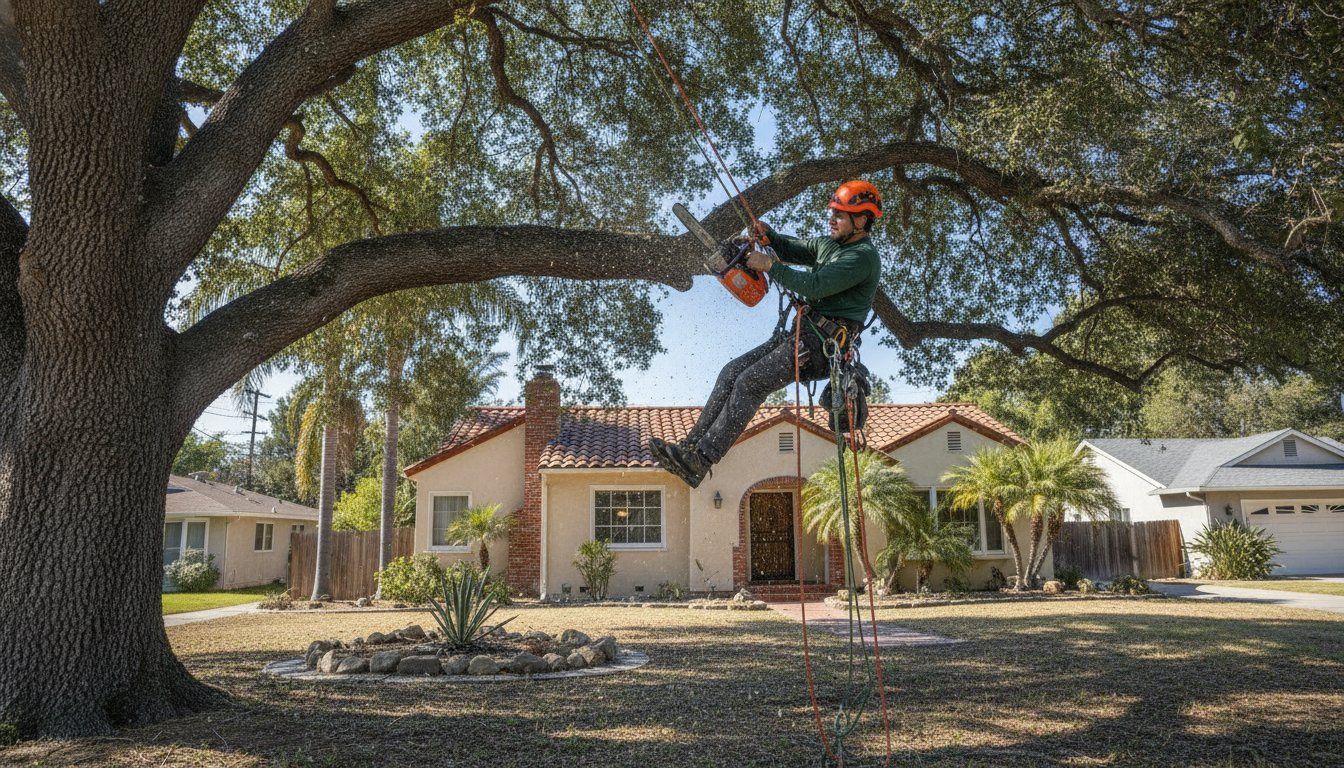
Professional tree care often involves climbing, but dead trees change the rules. Brittle limbs cannot reliably support a climber’s weight or hold the tension of traditional rope-and-saddle rigging. If the wood is too decayed to climb safely, we pivot to "no-climb" solutions. This typically involves using heavy machinery like cranes or bucket trucks to dismantle the tree from the top down. Our crews are also trained to identify "reaction wood." This is the specialized tissue a tree grows to reinforce itself against lean or wind. Knowing how this wood will react under the pressure of a saw is the difference between a controlled drop and a disaster.
The Hidden Dangers of "Felling" a Dead Tree
Don't be fooled by online tutorials showing perfect "face cuts." In a dead specimen, the wood fibers are often too weak to act as a proper hinge. This means the tree rarely falls in the exact direction you intended. There is also the "shatter effect" to consider. When a dry, brittle tree finally hits the ground, it doesn't just thud; it often explodes into heavy wooden shrapnel. A standard hard hat offers little protection against a hundred-pound limb shattering upon impact. The potential for property damage to your home or a neighbor’s fence far outweighs the cost of professional service.
Myth #4: "Waiting to Remove the Tree Will Save Me Money This Year"
Budgeting for property maintenance is always a balancing act. You might look at a dead trunk and decide to push the expense into next year's "to-do" list. It seems logical. Why spend the money now if the tree is still standing? Unfortunately, this is a financial trap. In the world of arboriculture, the cost of dead tree removal scales upward as the wood breaks down. The longer you wait, the more complex and expensive the project becomes.
The "Complexity Tax" of Advanced Decay
When a tree is freshly dead, it often retains enough structural integrity for a professional to climb and dismantle it piece by piece. This is a standard, efficient process. However, as decay sets in, the wood becomes "unclimbable." If our crew cannot safely tie into the tree, we must bring in specialized equipment like heavy-duty cranes or bucket trucks. These tools require larger crews and more setup time, which naturally increases the final bill. Waiting also puts your healthy landscaping at risk. A falling dead limb can easily crush a prized Japanese Maple or damage your irrigation system; this turns a single removal into a major yard renovation.
Pest Infestations and Secondary Risks
Think of a dead tree as a high-end hotel for local Temple City pests. Termites, carpenter ants, and wood-boring beetles are constantly searching for easy targets. A decaying trunk provides the perfect environment for these colonies to thrive. Once they've exhausted the nutrients in the tree, their next stop is often your home's siding or foundation. Dealing with a termite infestation in your attic is vastly more expensive than a scheduled dead tree removal. Beyond the bugs, decaying roots can cause silent damage. As they rot and shrink, they can create voids in the soil that lead to settling foundations or cracked utility lines.
Don't wait for a storm to force your hand. Emergency services during a high-wind event are always more costly due to the immediate risk and logistical hurdles. If you want to protect your property value and your wallet, it’s best to schedule a professional tree removal while the situation is still manageable. Proactive care is the only way to avoid the "decay tax" that comes with waiting too long.
Professional Dead Tree Removal in Temple City
Dealing with a hazardous tree is a significant source of stress for any homeowner. We understand that your property is your sanctuary, and the last thing you want is a multi-ton liability looming over your roof or driveway. Our local team specializes in safe, efficient dead tree removal tailored specifically for the residential landscapes of Temple City. We don't just show up and start cutting; we approach every project with the technical precision of specialists and the accessible, helpful attitude of a good neighbor.
Our Safety-First Removal Process
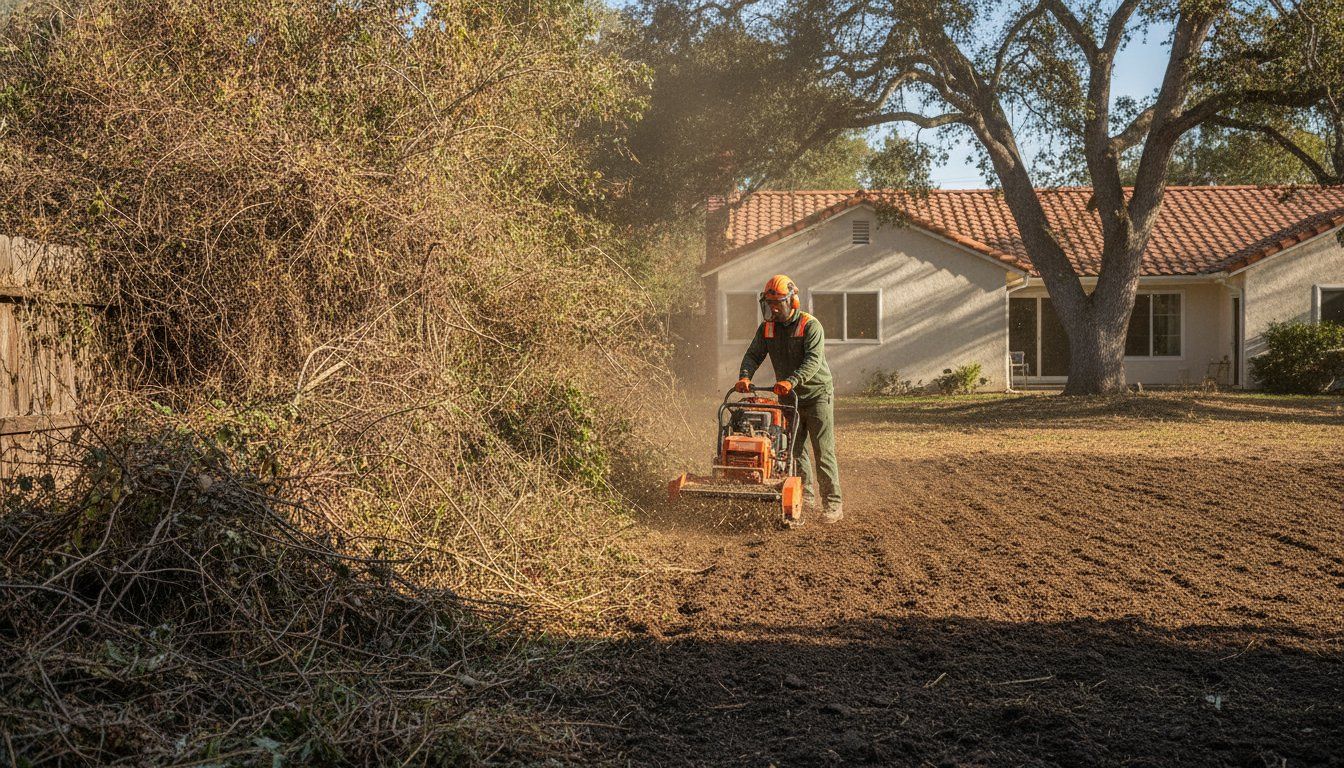
Safety isn't just a buzzword for our crew; it's the foundation of everything we do. We begin every project with a comprehensive site assessment to identify potential "targets" like power lines, neighbor's fences, or delicate garden beds. Because dead wood is notoriously unpredictable, we utilize specialized equipment designed to handle brittle structures without putting your family or your home at risk. Once the main trunk is safely on the ground, our work still isn't finished. We perform a thorough debris cleanup to ensure your property looks better than we found it.
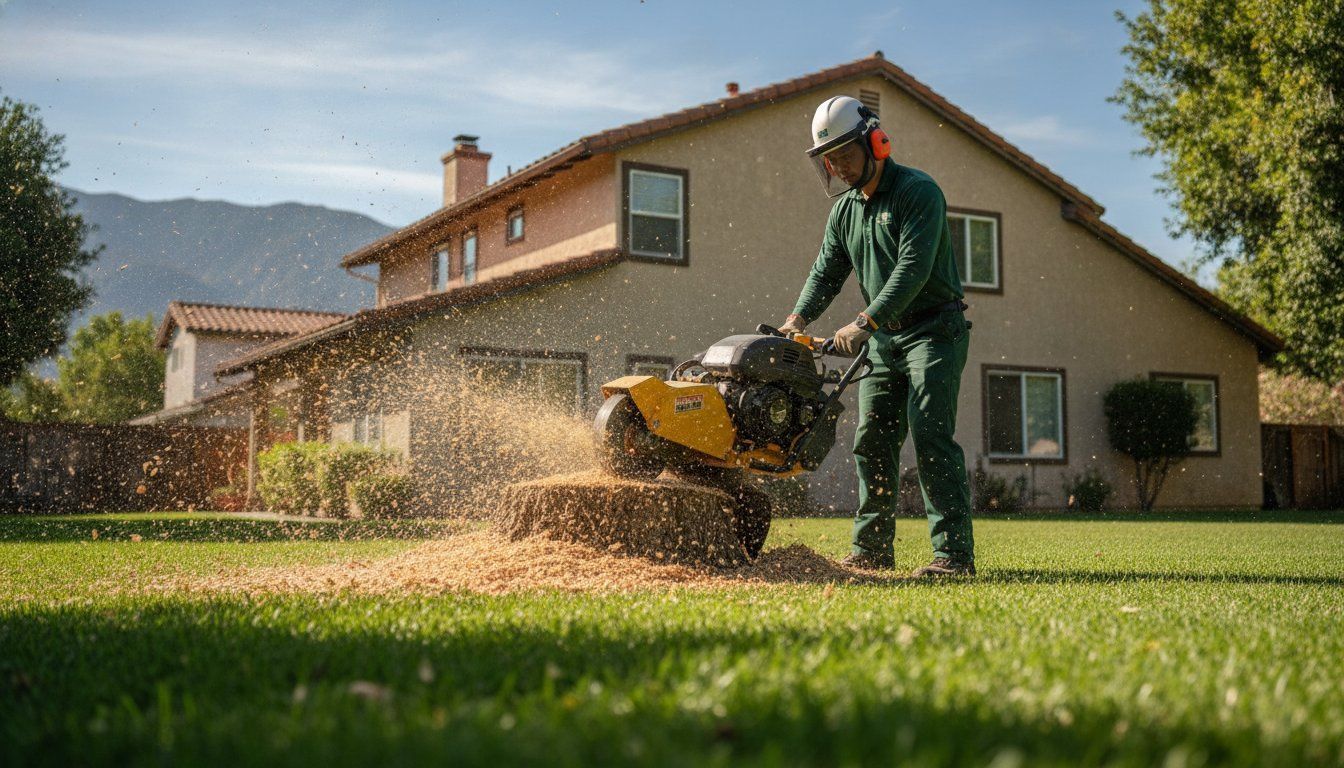
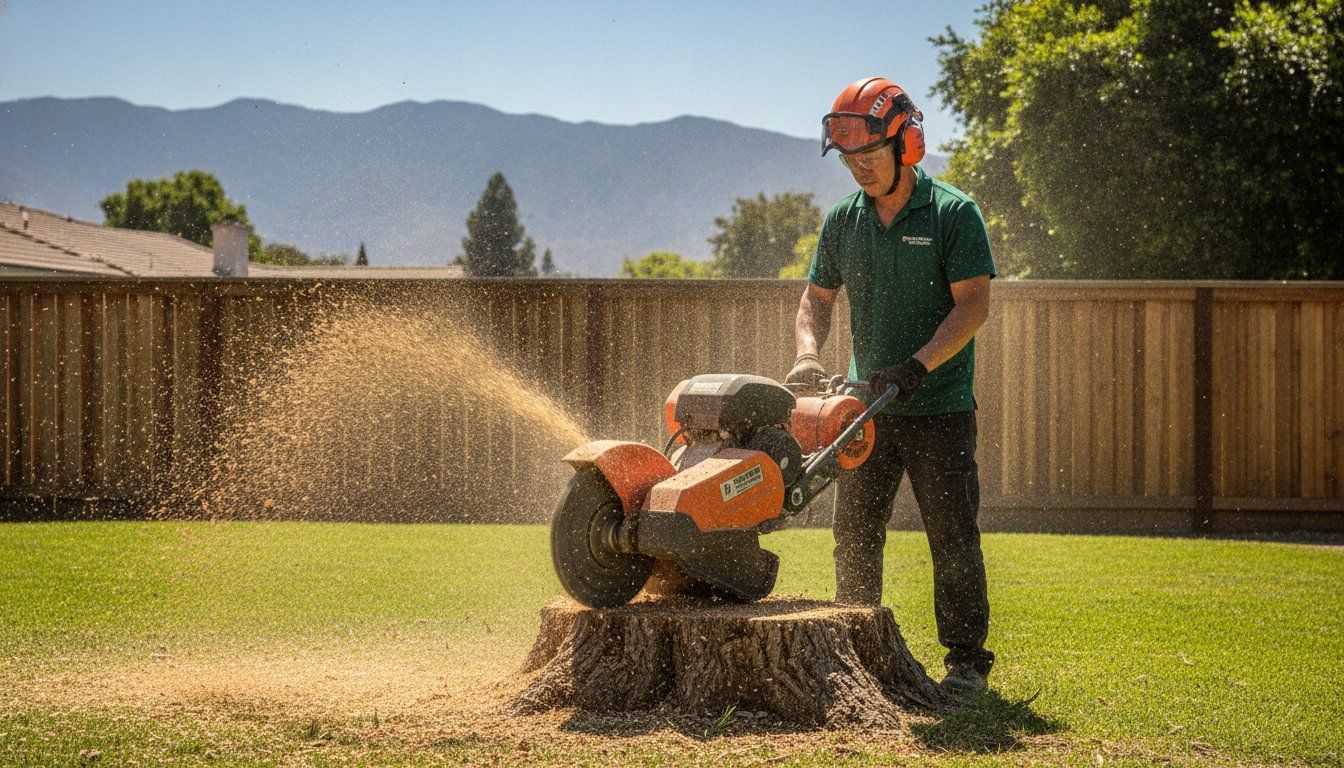
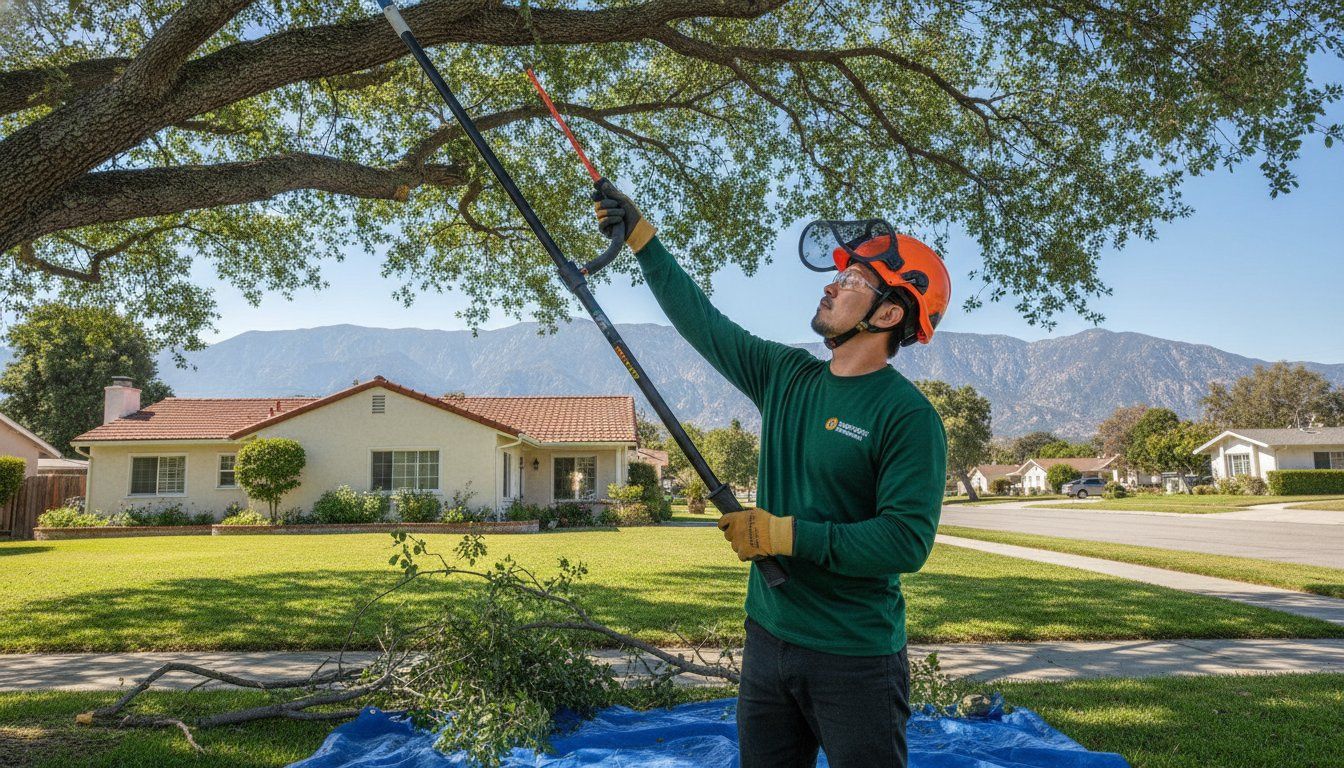
We also prioritize minimal impact on your surrounding environment. We know how much effort you've put into your turf and landscaping. Our technicians use ground protection mats and advanced rigging techniques to ensure our presence doesn't leave a lasting footprint on your yard. To truly complete the process, we offer stump grinding as the final step. Leaving a stump behind is more than just an eyesore; it can invite the very pests we discussed earlier, such as termites or carpenter ants. By grinding the stump several inches below the soil line, we clear the way for a fresh start and a beautiful, level lawn.
Take Action Before the Next Wind Event
Why wait for the next Santa Ana wind event to test the structural integrity of a brittle trunk? Proactive removal is the only reliable defense against local storm damage and the high costs associated with emergency services. Our Temple City team is here to provide a reliable property evaluation for your suspect trees. We'll walk the property with you, explaining exactly what we see and providing a clear, honest plan for action. This isn't about making a sale; it's about safeguarding your home and your community.
Choosing professional dead tree removal means you can finally stop worrying whenever the clouds turn grey or the wind picks up. You deserve a landscape that is safe for your children to play in and beautiful for everyone to admire. Let's work together to protect your property and give you the peace of mind that comes with a well-maintained, hazard-free yard.
Secure Your Property and Restore Your Peace of Mind
You've now seen how a "sleeping" tree can actually be a ticking clock for your property's safety. From the simple scratch test to understanding the physics of brittle wood, you now have the tools to spot a hazard before it fails. Why leave your home's safety to chance? Proactive dead tree removal is the most responsible way to protect your family and your investment. By acting now, you avoid the "decay tax" and the unpredictable risks that come with a falling limb.
As your trusted local experts serving Temple City, we specialize in hazardous and large tree removals that require precision and care. Whether a tree is in a tight spot that needs specialized crane assistance or you're facing an urgent situation, we're fully equipped to handle even the most complex emergency removals. We take pride in being more than just a service provider; we're your partners in maintaining a beautiful, safe environment for years to come.
Ready to clear the way for a safer yard? Request a Professional Hazard Assessment Today and let our experienced team provide the clarity you need. It’s time to trade that anxiety for the peace of mind that comes with a secure, professionally managed landscape. We're here to help you every step of the way.
Frequently Asked Questions
Is a tree dead if it has no leaves in the summer?
Yes, a lack of foliage during the peak growing season is usually a sign of a terminal condition. While some species might drop leaves early due to extreme drought, a completely bare canopy in July or August often indicates that the tree's vascular system has failed. You can confirm this by checking the tips of the branches; if they are brittle and snap easily, the tree is likely dead and requires professional evaluation.
Can a dead tree fall without wind?
Absolutely. Gravity and internal decay work together every single day, regardless of the weather. As wood-rotting fungi break down the structural cellulose inside the trunk, the tree becomes unable to support its own weight. We often see "widow-makers" or entire trunks fail on perfectly calm, sunny days because the wood has finally reached its breaking point. This is why waiting for a storm to act is such a dangerous gamble for homeowners.
How much does dead tree removal typically cost in Temple City?
The cost for dead tree removal depends on several specific factors, including the height of the tree, its proximity to power lines, and how much the wood has already decayed. Because dead wood is brittle and dangerous to climb, removals that require specialized equipment like cranes or bucket trucks may be priced differently than standard jobs. We recommend a site visit to provide an accurate estimate based on the unique safety requirements of your property.
Will my homeowners insurance pay for dead tree removal?
Standard policies generally don't cover the preventative removal of a dead tree. Insurance is designed to cover "sudden and accidental" damage, not routine maintenance. If a dead tree falls and damages your home, the claim might even be denied if the adjuster determines the tree was a known hazard that you neglected to address. Taking care of the removal now is almost always cheaper than paying a high deductible or covering a denied claim out of pocket.
What is the "scratch test" for checking if a tree is dead?
The scratch test is a simple DIY diagnostic where you use a fingernail or small knife to peek beneath the bark. You're looking for the cambium layer, which should be moist and vibrant green in a living tree. If you scratch several branches and find only brown, dry wood, the tree has likely passed away. For the most accurate results, perform this test on several different sides of the tree to ensure you aren't just looking at one dead limb.
Can I leave a dead tree standing for wildlife?
You can only safely leave a dead tree standing if it's located in a "zero-target" zone. In a deep forest, dead trees provide vital habitat for owls and woodpeckers, but in a suburban backyard, they're simply too risky. If the tree is within falling distance of your home, a neighbor's property, or a public sidewalk, the safety of people must come first. If you love local wildlife, consider removing the hazard and planting a native replacement that provides food and shelter.
How do I know if a leaning tree is about to fall?
Look closely at the ground on the side opposite the lean. If you see "heaving" soil, mounded dirt, or exposed roots that look like they're being pulled out of the earth, the tree is in the process of failing. This is a structural emergency. Other warning signs include deep vertical cracks in the trunk or bark that is falling off in large sheets. If you notice these changes after a rainstorm, stay clear of the area and call for help immediately.
Do I need a permit for dead tree removal in Temple City?
Temple City has specific ordinances regarding the removal of "protected" or "significant" trees based on their species and size. However, most local regulations provide exemptions or expedited paths for trees that are confirmed to be dead or pose an imminent hazard to public safety. It's always best to check with the municipal planning department first. Our team can often help you understand these local requirements as part of our professional assessment process.